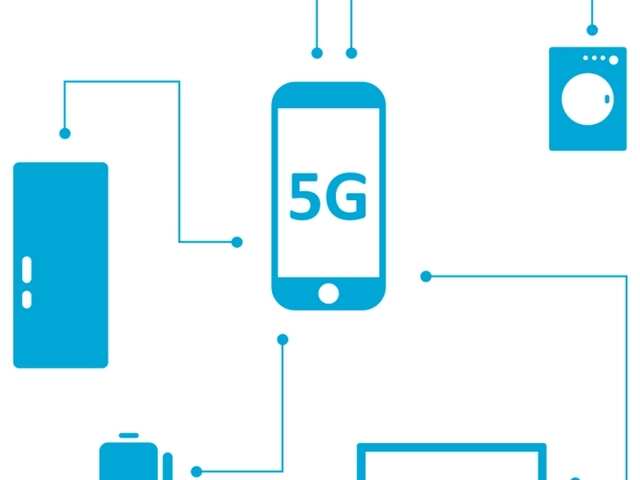
Cisco 5G network gear`s ready


Cisco Systems said on Sunday it aims to disrupt the wireless radio access market led by Huawei, Ericsson and Nokia by backing challengers who make more flexible software versions of traditional mobile gear. Cisco, known for making networking gear that moves big volumes of data around the internet, wants a bigger share of the mobile market by backing these alternative providers rather than by making radio access equipment itself.


Its radio access network push is part of Cisco's efforts to prove to mobile network operators that investing in modern infrastructure and automation tools can help them to cope with increased data demands, while lowering costs.


The Silicon Valley company made the announcement ahead of this week's Mobile World Congress in Barcelona, where hundreds of telecom operators are looking for new ways to deal with exploding customer data demands and intense pricing pressures. Cisco said it is working with more than 20 network operators to offer next-generation 5G services, which promise to deliver not just faster phones and video, but also connected cars and internet-connected industrial sensors over the next decade.

The Day Humans Taught Robots to Fight Back


An amazing video of a robot dog fighting off a human as it tries to open a door is not only creepy, but it also has raised the question: Why are we teaching a robot to fight back against humans?
The "dog" in question is the Spot Mini, a 66-lb. (30 kilograms) robot designed to fit comfortably in a home or an office. In the video, the dog is shown attempting to open a door—when a human comes with a hockey stick and shoves the robot's grasping arm away from the door knob. The robot manages to open the door anyway, and even continues standing when a human tries to pull "him" away from the door using a huge leash.


Unlike some of Boston Dynamics' other robots, such as the humanoid Atlas, SpotMini isn't designed to help people in a disaster situation. Instead, he's meant to be a vaguely cute home or office assistant. But that means he actually needs extra capabilities that a disaster robot might not.
For instance, to be useful, a fetching robot would need to be able to pick up objects of different sizes and bring them to its "master," which many battlefield robots aren't designed to do. And the home environment also involves challenges, such as doorways, stairs and slippery obstacles, which earlier versions of the robot struggled with. So far, Boston Dynamics has shown that progressive iterations of Spot Mini can do these tasks: The company  has posted videos of this little dog climbing stairs, crawling under tables, loading a dishwasher, filling the trash and bringing someone a Diet Coke.
And of course, many homes have children, who are not known for their restraint when dealing with pets and other moving objects, as this video montage of babies riding Rumbas reveals.
Boston Dynamics doesn't explicitly mention the hazards of small children, but its tersely-worded description of the robot in the YouTube video does hint at that type of challenge.

HTC launches 'Vive Business Edition' VR system in India


 NEW DELHI: With the aim to drive business use of Virtual Reality (VR), Taiwanese electronics giant HTC on Wednesday launched the "vive Business Edition" headset for Rs 1,26,990 in India.
Vive Business Edition, that can be purchased from Amazon and www.imonline.co.in, would allow organisations to order Vive VR systems with additional services adapted for business and commercial environments. 

"Built to scale with growing business requirements, Vive Business Edition delivers exceptional experience and innovative solutions that address the growing business needs of companies globally," Faisal, President, South Asia at HTC, said in a statement.

"As a part of our focus in 2018, we plan to expedite the growth of our partners through application of Vive technology across areas like gaming, entertainment, automotive, engineering and medical, among others," Siddiqui added.

Alongside the full Vive VR system, Vive Business Edition comes with commercial licensing, a 12-month limited warranty and an option to order the device in large quantities.

BSNL, NTT AT sign pact for future tech, 5G test


New Delhi: State-owned telecom firm BSNL and Japan`s NTT AT along with their Indian partner Virgo Corps have signed an agreement to collaborate in futuristic technologies.
"BSNL and NTT Adavance Technology Corporation (Telecom leader in Japan) along with their partners in Virgo Corp have signed a MoU (memorandum of understanding) to collaborate in futuristic technologies such as artificial intelligence / IoT and jointly create a 5G test bed," BSNL said in a statement.  

The agreement is in line with the vision of the Prime Minister Narendra Modi and Japanese Prime Minister Shinzo Abe to collaborate on the next generation technologies and use the expertise of India in software and Japanese expertise in manufacturing, the statement said.

BSNL CMD Anupam Shrivastava along with board of directors; NTT AT President and CEO George Kimura, and Virgo Corp Chairman Monga were present during the signing of the pact.

HTC Desire 12

HTC Desire 12 specifications revealed...


smartphone maker HTC is working on its next flagship smartphone. Likely to be called HTC DESIRE 12, the smartphone was leaked few days ago by popular leakster Evan Blass.

He revealed that the company is working on a new Desire series smartphone which is expected to come with a full screen display with 18:9 aspect ratio. Now, Android Authority has got hold of a retail box of the phone with a name called Desire 12. The box has revealed most of the specifications of the upcoming smartphone.

As per the leaked retail box, the HTC Desire 12 is expected to fall under the entry level smartphone segment. The handset is said to sport a 5.5-inch HD+ display with 18:9 aspect ratio and 720x1440 pixel resolution. The device is expected to be powered by quad-core MediaTek processor. The device will reportedly come with a 3GB of RAM and 32GB internal storage. Users will also be able to add microSD card.

The smartphone is said to sport a 12MP rear camera with LED flash and a 5MP front shooter for selfies. It is expected to be backed by a 2730mAh battery and 4G, LTE, 3G, Wi-Fi, Bluetooth, GPS as connectivity options.

Earlier this month, HTC launched its U11+ smartphone in India at Rs 56,990. The smartphone comes with the same Edge Sense feature which was found in the HTC U11. The feature can be accessed by squeezing the sides to launch any app or click a picture and more. Users have an option to customize this gesture as per their choice.

It runs Android 8.0 Oreo operating system and is powered by Qualcomm Snapdragon 835 processor. The device is backed by a 3930mAH battery and sports a 12MP rear camera with LED flash.

 https://www.gsmarena.com/htc_desire_12-9071.php

Paying with Your Face

Face-detecting systems in China now authorize payments, provide access to facilities, and track down criminals. Will other countries follow?


Shortly after walking through the door at Face++, a Chinese startup valued at roughly a billion dollars, I see my face, unshaven and looking a bit jet-lagged, flash up on a large screen near the entrance.
Having been added to a database, my face now provides automatic access to the building. It can also be used to monitor my movements through each room inside. As I tour the offices of Face++ (pronounced “face plus plus”), located in a suburb of Beijing, I see it appear on several more screens, automatically captured from countless angles by the company’s software. On one screen a video shows the software tracking 83 different points on my face simultaneously. It’s a little creepy, but undeniably impressive.
Over the past few years, computers have become incredibly good at recognizing faces, and the technology is expanding quickly in China in the interest of both surveillance and convenience. Face recognition might transform everything from policing to the way people interact every day with banks, stores, and transportation services.
https://cdn.technologyreview.com/i/images/paymainillustration_0.jpg?sw=500&cx=49&cy=0&cw=2415&ch=3220
Technology from Face++ is already being used in several popular apps. It is possible to transfer money through Alipay, a mobile payment app used by more than 120 million people in China, using only your face as credentials. Meanwhile, Didi, China’s dominant ride-hailing company, uses the Face++ software to let passengers confirm that the person behind the wheel is a legitimate driver.

The technology figures to take off in China first because of the country’s attitudes toward surveillance and privacy. Unlike, say, the United States, China has a large centralized database of ID card photos. During my time at Face++, I saw how local governments are using its software to identify suspected criminals in video from surveillance cameras, which are omnipresent in the country. This is especially impressive—albeit somewhat dystopian—because the footage analyzed is far from perfect, and because mug shots or other images on file may be several years old.


Redmi Note 5 Pro

Check out

Redmi Note 5 Pro


http://www.mi.com/in/redmi-note-5-pro/ 

http://www.mi.com/in/redmi-note-5-pro/

MS Dhoni's Special Message For Armed Forces After Being Honoured With Padma Bhushan

Mahendra Singh Dhoni was in his army uniform when he received the Padma Bhushan from President Ram Nath Kovind.           ...